Bitcoin is a digital money system that runs on thousands of computers around the world instead of at a bank or a company. Nobody owns it, and its rules, including a hard limit of 21 million coins, are enforced by free software that anyone can run and check.
If you are brand new, think of this page as a map. It walks through the basics in ten short sections and points to a deeper guide for each one, so you can stop whenever you have what you need. Everything here is educational, not financial advice.
What is bitcoin?
Bitcoin is two things at once: a unit of money, written BTC, and the network that moves it. You can send it to anyone with an internet connection, on any day of the week, without asking a bank for permission. Every payment is recorded on a public ledger that anyone can read, and the rules for what counts as a valid payment are written into open-source software rather than into a company's terms of service.
Where did bitcoin come from?
On October 31, 2008, someone using the name Satoshi Nakamoto posted a link to a white paper titled Bitcoin: A Peer-to-Peer Electronic Cash System on a cryptography mailing list. On January 3, 2009, the first block of the chain was created, known as the genesis block, and the network was up and running.
Nobody has ever confirmed who Satoshi Nakamoto really is. If you enjoy a good mystery, start with who Satoshi Nakamoto is, then read about the genesis block and the white paper, section by section.
How does bitcoin run without a boss?
There is no central bitcoin computer to switch off. The network is made of nodes, which are ordinary computers running bitcoin software. Each node keeps its own copy of the ledger and checks every new payment and block against the same list of rules. If something breaks a rule, nodes simply refuse to pass it on.
That is how a system with no boss still agrees on who owns what: everyone checks the same rules and ignores anything that does not follow them. Our guide to what a bitcoin node is shows how to run one, and how bitcoin works follows a single payment from start to finish.
What is the blockchain?
The blockchain is bitcoin's ledger. Payments waiting to be recorded are grouped into batches called blocks, and a new block is added roughly every ten minutes. Each block contains a fingerprint of the one before it, which links them in a chain. Changing an old payment would mean redoing every block that came after it, which is why the history is so hard to rewrite. For a closer look, see our guide to what a bitcoin block is.
What is bitcoin mining?
Miners are the computers that compete to add the next block. To win the right, a miner has to find a number that makes the block's fingerprint meet a demanding target, which takes an enormous amount of trial and error. This is called proof of work. Everyone else can check the answer instantly.
The winner is paid with newly created bitcoin plus the fees from the payments in the block. Read what bitcoin mining is for the hardware and the rewards, or proof of work explained for the puzzle itself.
Why will there only ever be 21 million bitcoin?
The 21 million limit is part of the rules, and every node enforces it. New coins are created only as mining rewards, and that reward is cut in half every 210,000 blocks, about every four years. More than 20 million of the 21 million have already been issued, and the last fraction is expected to arrive around the year 2140.
Each bitcoin can be split into 100,000,000 smaller units called satoshis, or sats, so you never need to own a whole coin. Read why there are only 21 million bitcoin, the next bitcoin halving and how many sats are in a bitcoin.
What is a bitcoin wallet?
A wallet does not hold coins the way a leather wallet holds bills. The coins stay on the public ledger. What a wallet stores is your private keys, the secrets that prove you may spend them. Most wallets back those keys up as a recovery phrase of ordinary words. Anyone who learns that phrase can take the coins, so it must never be shared.
Wallets come in several types, from phone apps to dedicated devices. Our bitcoin wallets explained guide covers them, and not your keys, not your coins explains why people care who holds the keys.
How do bitcoin payments and fees work?
To send bitcoin, your wallet signs a payment with your private key and sends it to the network. You attach a small fee, which goes to the miner who includes your payment in a block. When many people want to pay at once, fees rise because space in each block is limited. Our guide to bitcoin transaction fees goes deeper.
For small, quick payments there is a second layer on top of bitcoin called the Lightning Network, covered in Lightning and zaps explained.
What bitcoin is not
Bitcoin is not a company, so there is no support line, no guarantee and no one to promise you anything. Its price moves up and down, sometimes sharply, and nobody can reliably predict it, including us. It is also pseudonymous rather than anonymous: payments are tied to addresses instead of names, but the ledger is public, and patterns can sometimes be traced back to real people.
Scams are common around anything involving money. A legitimate service will never ask for your recovery phrase.
Where to go next
Here is a sensible reading order for a complete beginner:
- How does bitcoin work? for the life of a single payment.
- What is bitcoin mining? for how blocks get made.
- Bitcoin wallets explained for how to hold your own keys safely.
- The history of bitcoin timeline for the story from 2008 onward.
If the culture grabs you, our bitcoin slang and memes glossary will get you through the group chat.
Wear the basics
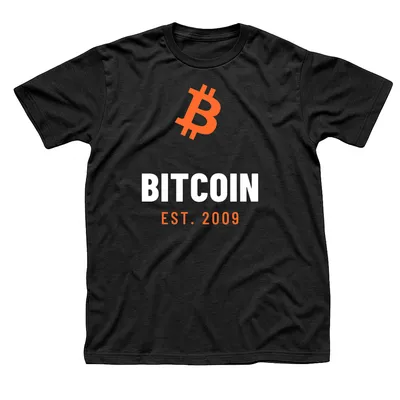
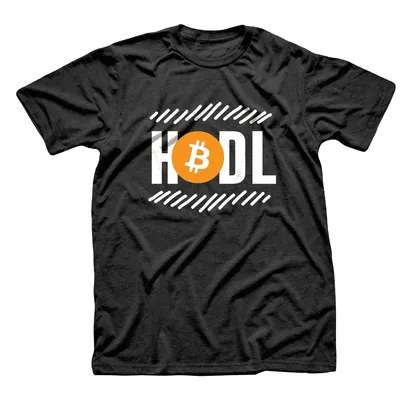
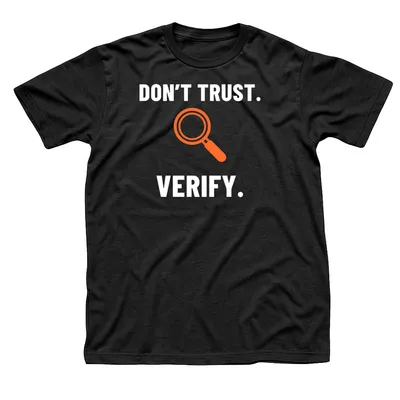
A few of our tees map neatly onto this guide. The Bitcoin EST. 2009 tee shows a big tilted orange Bitcoin symbol above the year the network began. The Bitcoin Logo tee keeps it small, a single orange B on the chest. The HODL tee has an orange coin standing in for the O, and Don't Trust, Verify sets the community's favorite rule around an orange magnifying glass. The whole range is on our bitcoin t-shirts page, and the bitcoin gifts page is a good place to start for a newcomer who just got curious.
Sources: the bitcoin white paper, the bitcoin.org vocabulary page and Wikipedia on Bitcoin.