The genesis block is block 0, the very first block of the bitcoin blockchain, mined by Satoshi Nakamoto on January 3, 2009. Hidden inside it is a line of text quoting that day's front page of The Times of London: "Chancellor on brink of second bailout for banks."
Every block since then links back to it, in an unbroken chain. Here is what the genesis block contains, why that headline matters and what happened to its reward.
The bitcoin white paper came first
Bitcoin started as a document, not a block. On October 31, 2008, Satoshi posted a nine-page paper called Bitcoin: A Peer-to-Peer Electronic Cash System to a cryptography mailing list (read it at bitcoin.org). It described a way for people to pay each other online without a bank in the middle, using a shared ledger secured by proof of work.
The paper explains the idea of chaining blocks together, but a chain needs a first link. About nine weeks later, Satoshi created it.
The genesis block message
Every block starts with a special transaction, called the coinbase, that pays the miner. Its input has room for a bit of arbitrary data. In the genesis block, Satoshi used that space for this text:
The Times 03/Jan/2009 Chancellor on brink of second bailout for banks
It is the headline from the front page of The Times, the London newspaper, on January 3, 2009, about the British government preparing more support for banks during the financial crisis. So if you have wondered what newspaper is referred to in the genesis block, it is The Times.
The headline does two jobs:
- It works as a timestamp. Quoting that day's newspaper proves the block could not have been created before January 3, 2009, so nobody could have secretly mined a long chain in advance.
- It reads like a comment. Bitcoin launched in the middle of bank bailouts, and the headline is widely read as a note about why a money system without bailouts might matter. Satoshi never spelled out the motive, so treat that reading as interpretation, not quotation.
Block 0 date and the six-day gap
The genesis block carries a timestamp of January 3, 2009. Block 1 did not follow until January 9, 2009, the same day Satoshi announced the first release of the Bitcoin software on the mailing list. Normal blocks arrive about ten minutes apart, so the gap stands out.
Nobody knows the exact reason. The Bitcoin Wiki notes a few possibilities, such as Satoshi testing before release or setting the genesis timestamp to match the headline (Bitcoin Wiki). What we know for sure is that the network went public on January 9, and that a few days later, on January 12, Satoshi sent the first bitcoin transaction to Hal Finney.
The 50 BTC that can never be spent
The genesis block paid a reward of 50 BTC, the standard block reward at the time. Those coins can never be spent. Because of the way the genesis block is written into the code, its reward was never added to the list of spendable coins that nodes keep.
Whether that was intentional is another open question. Either way, those 50 BTC are counted in the issuance schedule but frozen forever, a small permanent monument at the start of the chain.
The genesis block address
The reward went to the address 1A1zP1eP5QGefi2DMPTfTL5SLmv7DivfNa. Since 2009, people have sent small amounts of bitcoin to it as a tribute, much like tossing coins in a fountain. Those later deposits are separate from the original 50 BTC. Whether anyone could ever spend them depends on whether someone holds that address's private key, which no one has shown.
For the record, the genesis block hash is 000000000019d6689c085ae165831e934ff763ae46a2a6c172b3f1b60a8ce26f. The long run of leading zeros comes from proof of work: miners search for a hash below a target, and lower targets mean more zeros.
What is the purpose of a genesis block in a blockchain
Any blockchain needs a fixed starting point. Each block contains the hash of the block before it, so the chain only makes sense if everyone agrees on block 0. In bitcoin, the genesis block is written directly into the software rather than downloaded from other computers. When a new node starts up, it already knows block 0 and checks every following block against it.
That gives the genesis block a few roles:
- An anchor. Every node in the world agrees on the same first block without having to trust anyone.
- A fingerprint for the network. Test networks use different genesis blocks, so software can tell them apart from the real network.
- The start of the money supply. The 50 BTC reward kicked off the issuance schedule that ends near 21 million coins, which our guide on why there are only 21 million bitcoin walks through step by step.
Why bitcoiners still celebrate January 3
Some bitcoiners mark January 3 each year as the network's birthday, and the headline turns up on posters, mugs and shirts. It is one of the few moments in bitcoin history where we have Satoshi's own words, and the timing is hard to beat. The who is Satoshi Nakamoto guide covers what else is known about the person behind block 0.
If you want something that nods to block 0 without quoting it, a few of our designs come close:
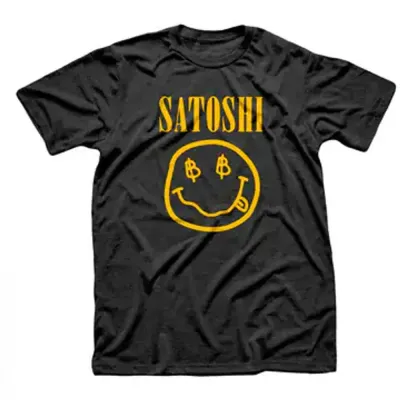
- The Satoshi tee honors the creator with yellow lettering and a grinning bitcoin-eyed face.
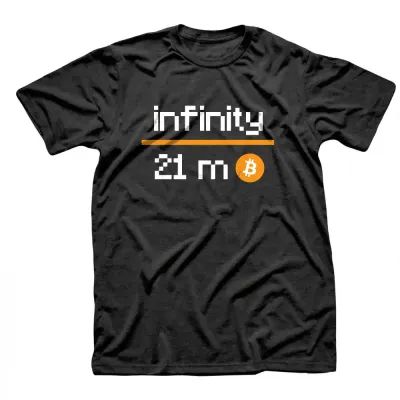
- The Infinity / 21M tee is all about the fixed supply that started with the first 50 coins.
- The Bitcoin Logo tee keeps it to one small orange B on the chest.