A zap is a small bitcoin payment sent over the Lightning Network, most often as a tip on a post in a Nostr app. Tap the lightning bolt icon and real sats move from your wallet to the author's in a few seconds, and the zap shows up publicly under the post.
Zaps turned a like button into a payment button, and in the process they gave bitcoiners a new everyday verb. This guide explains the Lightning Network in plain words, where zaps come from, how one travels from your phone to someone else's wallet, and what you need to start sending sats.
Lightning network explained in plain words
Bitcoin's main chain adds a block about every ten minutes, and each block has limited room. That is great for settling large or final payments, but slow and costly for buying a coffee or tipping a writer 100 sats. The Lightning Network is a second layer built on top of bitcoin to handle those small, fast payments.
The core idea is the payment channel. Picture a bar tab:
- Open the tab. Two people lock some bitcoin into a shared channel with one ordinary on-chain transaction, called the funding transaction.
- Run the tab. They can now send payments back and forth as often as they like. Each payment just updates who owns how much of the locked amount, and none of those updates touch the blockchain.
- Settle up. When they are done, they close the channel with another on-chain transaction that pays each side their final balance.
The clever part is that you do not need a channel with everyone. Payments can hop across a chain of channels, through other people's nodes, to reach someone you have never dealt with. The route is wrapped in layers of encryption, so each hop learns only where to send the payment next, not who sent it or who receives it. Routing nodes charge tiny fees, often a fraction of a cent.
Joseph Poon and Thaddeus Dryja described the design in a paper first published in February 2015, and Lightning payments went live on bitcoin's main network in 2018. Today many wallets support it, and you rarely have to think about channels at all.
Where zaps come from: Nostr
Nostr is an open protocol for social media, first written in 2020 by a Brazilian developer known as fiatjaf. Instead of one company owning the platform, your account is a cryptographic key pair, and your posts are passed around by independent servers called relays. Many different apps can read the same network.
Nostr apps became widely available in February 2023, when Damus became the first Nostr app listed on Apple's App Store. Around the same time, a Nostr standard called NIP-57 defined how to attach Lightning payments to posts and profiles, and gave them a name: zaps. Because Nostr users already thought of their accounts as keys rather than usernames, paying each other in sats felt natural. Zaps quickly became the signature feature of the network.
How a Nostr zap works, step by step
Behind that single tap, a few things happen in order:
- You tap the bolt on a post and choose an amount.
- Your app looks up the author's Lightning address, which is stored in their Nostr profile and looks a lot like an email address.
- Your app sends a zap request, a small signed message saying who you are zapping, how much and on which post.
- The author's Lightning service replies with an invoice, a one-time payment request for that amount.
- Your wallet pays the invoice over the Lightning Network.
- The author's side publishes a zap receipt to Nostr relays.
- Apps display the zap under the post, often with a running total.
The whole process usually takes a few seconds. One detail from the NIP-57 spec is worth knowing: the public receipt is created by the receiving side, so it is a record that a payment was claimed, not a cryptographic proof that it happened.
What you need to send sats
To send sats with a zap, you need two things:
- A Lightning wallet. Some are custodial, meaning a company holds the funds and the keys for you, which is simple but brings the usual trust tradeoffs covered in our guide to not your keys, not your coins. Others are self-custodial and run Lightning on your own device.
- A Nostr app that supports zaps, connected to that wallet. Many apps walk you through the connection in a couple of screens.
To receive zaps, add a Lightning address to your Nostr profile. You do not need to run your own Lightning node, though some people do, often next to their own bitcoin node.
Zaps are counted in sats, the hundred millionth slices of a bitcoin. If those amounts still look abstract, our guide on how many sats are in a bitcoin has a simple conversion method.
Send sats beyond Nostr
The zap is the social version, but the underlying move, sending sats over Lightning, works anywhere. You can pay a Lightning invoice shown as a QR code at a shop, send sats to a friend's Lightning address, tip a creator through a link, or split a dinner bill in seconds. The same bolt icon tends to mark all of it, and "zap me" has become a friendly way to say "send me a few sats."
A few habits make zapping more pleasant:
- Start small. A few hundred sats is a meaningful thank you on Nostr, and it keeps experiments cheap.
- Remember it is public. Zaps on posts are visible to everyone, along with the account that sent them.
- Treat it as final. Lightning payments cannot be reversed, so check the amount before you tap.
- Keep your wallet small. A hot wallet for zaps is spending money, not long-term savings.
Shirts for people who zap
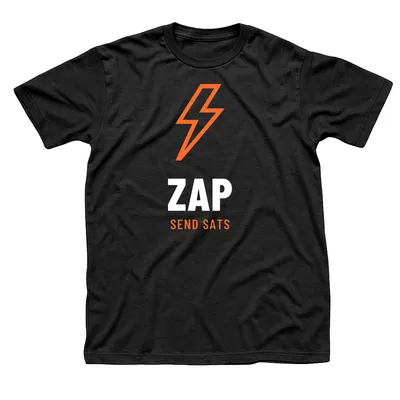
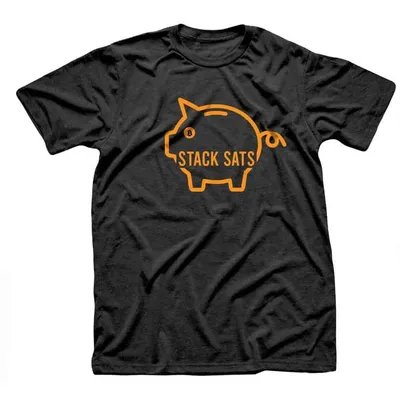
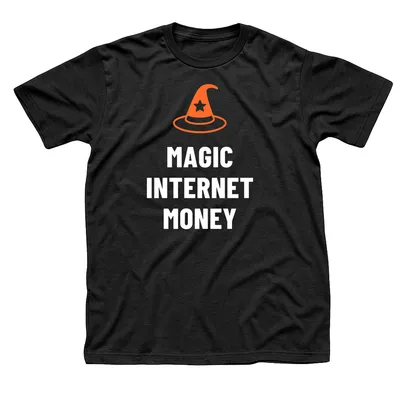
Our Zap tee puts a bold orange bolt over ZAP in huge white letters, with SEND SATS underneath in orange, about as close as a shirt gets to a tip button. If your habit runs the other way, collecting sats rather than sending them, the Stack Sats tee shows an orange line-art piggy bank with the phrase across its belly. And for the friend who still thinks bitcoin sounds like sorcery, Magic Internet Money sets an orange wizard hat over the old nickname. All three are printed when you order and shipped from the USA, and more designs live on our bitcoin meme shirts page.
Sources: Wikipedia on the Lightning Network, Wikipedia on Nostr and the NIP-57 zaps specification.