A bitcoin wallet is an app or a device that stores your private keys, the secret codes that let you spend your bitcoin. It does not literally hold coins, because those stay on the blockchain. The most important rule about any wallet: never share your seed phrase with anyone, ever.
This guide covers the main types of bitcoin wallets, the difference between a hot wallet and a cold wallet, what a seed phrase is and how to protect one. It names no brands and recommends none, and it is educational only, not financial advice. For the bigger picture, see bitcoin basics for beginners.
What a bitcoin wallet really stores
Bitcoin works with pairs of keys. A public key, and the addresses made from it, can be shared freely so people can send you bitcoin. A private key stays secret and lets you sign a payment that moves the coins. The bitcoin.org vocabulary page defines a private key as a secret piece of data that proves your right to spend bitcoin from a specific wallet.
So the wallet's job is to keep your private keys safe, build payments, sign them and show your balance by reading the blockchain. If the wallet app is deleted or the device is lost, the coins are still on the ledger. What you lose is the means to move them, unless you have a backup.
Custodial vs non-custodial wallets
This is the first split, and it matters more than any gadget:
- Custodial. A company holds the keys for you, like an account at an exchange or an app. You log in with a password and the company moves coins on your behalf. It is convenient, and if you forget your password you can usually recover it, but you are trusting the company.
- Non-custodial (self-custody). You hold the keys yourself in a wallet you control. Nobody can freeze the coins, and nobody can recover them for you either. This is the idea behind not your keys, not your coins.
Everything below describes non-custodial wallets, because that is where seed phrases and safety rules come in.
Hot wallet vs cold wallet
The next split is whether the keys ever touch the internet:
- Hot wallet. The keys live on a device that is online, such as a phone or a computer. It is fast and handy for spending, but it is exposed to malware, phishing and a stolen or hacked device.
- Cold wallet. The keys are kept offline, so a remote attacker cannot reach them. Cold storage is slower to use, which is the point. It suits savings you do not plan to touch often.
Many people use both, the way some people carry a little cash and keep the rest at home. The bitcoin.org wallet guide advises keeping most funds in cold storage and only what you need day to day in a hot wallet.
Types of bitcoin wallets
Here are the common categories, described generally:
- Mobile wallets. Apps for a phone. Portable, good for everyday payments and scanning QR codes, but a lost or damaged phone puts the keys at risk without a backup.
- Desktop wallets. Software on a computer. They can offer more control and sometimes connect to your own node, but the computer is exposed to malware.
- Hardware wallets. Small dedicated devices that hold keys offline and sign payments internally. They are popular for larger amounts. They can be lost, damaged or bought from a bad source, so the backup still matters.
- Paper wallets. Keys printed or written on paper. It is an old method, easy to get wrong and rarely recommended to beginners today.
- Multisignature wallets. These need more than one key to approve a payment, for example two out of three. They add safety and complexity.
- Watch-only wallets. They can see balances and receive payments but cannot spend, because they hold no private keys.
- Lightning wallets. A separate kind of wallet for fast, small payments on the Lightning Network, covered in Lightning and zaps explained.
What is a seed phrase?
A seed phrase, also called a recovery phrase, is a list of ordinary words that can rebuild every key in your wallet. Most wallets use a standard called BIP39, which draws the words from a fixed list of 2,048 words and allows phrases of 12 to 24 words, with 12 and 24 the most common. Some wallets also let you add an optional passphrase, an extra secret word that creates a completely different set of keys.
The key point is that the phrase is the wallet. If you lose your phone, you can type the words into a new wallet and get everything back. And if somebody else learns the words, they can do the same and take every coin, from anywhere, with no way to stop them. That is why the phrase deserves more protection than a password.
Seed phrase safety rules
These rules apply to every wallet. Read them twice.
- Never share your seed phrase with anyone. No real support team, exchange, developer or wallet maker will ever ask for it. Anyone who does is trying to steal from you.
- Never type it into a website, a form or a chat. Fake sites that ask you to "validate" or "sync" your wallet are a classic trap. The only place it belongs is the official wallet when you restore it.
- Never keep it as a photo, a note or a cloud file. Screenshots, email drafts and password-manager notes can be copied by anyone who breaks into those accounts.
- Write it by hand, offline. Use paper or a purpose-made metal backup, and store it somewhere private and protected from fire and water.
- Keep a second copy elsewhere. One backup in one place is one accident away from gone.
- Practice a restore. With a small amount, prove that your backup really works before you rely on it.
- Never use a wallet that arrives with the words already written down. If a device or card comes with a pre-filled phrase, someone else knows it.
Also be wary of unsolicited messages, fake wallet apps in app stores, and anyone pushing you to act fast. Urgency is the scammer's favorite tool.
How to choose a wallet, in general terms
You do not need a brand name to ask good questions:
- Does it let you hold your own keys and see a seed phrase?
- Is the software open source, and has it been around long enough to have a track record?
- Are you getting it from the official source, on a device you trust?
- Does the way you plan to use it match the amount at stake? A spending wallet and a savings wallet can be different tools.
Start small, learn the basics, and add protection as the amount grows. This is general information, not a recommendation of any product.
Wear the principle
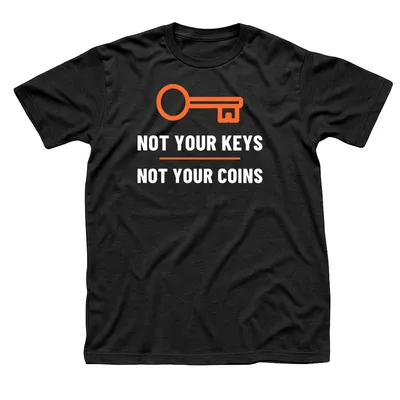
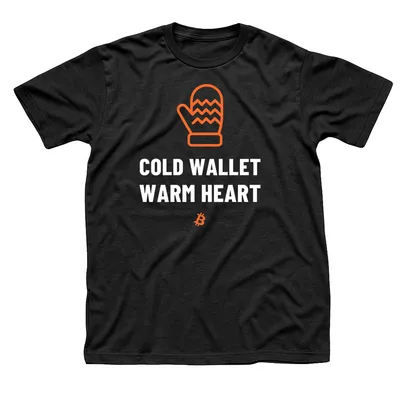
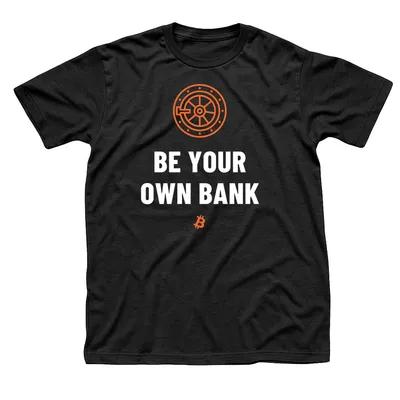
The ideas in this guide are the soul of several of our tees. The Not Your Keys tee puts an orange skeleton key with a coin for its bow above its six-word warning. The Be Your Own Bank tee draws an orange vault door with a spoked wheel handle. And the Cold Wallet, Warm Heart tee pairs an orange knitted mitten with its cozy punchline, a good gift for someone who keeps their keys offline. They are black unisex tees, and more sayings live in our bitcoin quote shirts collection.
Sources: the bitcoin.org vocabulary page, the bitcoin.org wallet guide and BIP39, the seed phrase standard.