A bitcoin transaction fee is a small payment you attach to a transaction so miners will include it in the next block. It is priced in satoshis per virtual byte (sat/vB), which is the fee rate: how many sats you pay for each unit of space your transaction takes up in a block.
Fees are not fixed. They rise when lots of people want to send bitcoin at the same moment and fall when the line is short. This guide explains what the mempool is, how to read a fee rate, why bitcoin fees are high at some times, and where they stand today.
What is a bitcoin transaction fee?
Every block has a limited amount of room, and miners pick which waiting transactions to include. The fee is what you offer in exchange for that room. The miner who builds the block collects the fees of everything inside it, on top of the newly created coins, so fees are paid to miners and not to a company, a wallet app or the bitcoin software's developers.
Under the hood there is no separate "fee" line. A transaction spends some coins and sends a smaller total to its destinations, and the leftover difference is the fee. Your wallet works this out for you, so you normally just see a total.
What is a satoshi per vbyte?
A satoshi, or sat, is the smallest unit of bitcoin, one hundred millionth of a coin. Our guide on how many sats are in a bitcoin covers that unit. A vbyte (virtual byte) is a measure of how much block space a transaction uses. Blocks are capped at 4,000,000 weight units, and one vbyte equals four weight units, so a block holds at most about 1,000,000 vbytes.
Your total fee is simply the fee rate multiplied by the size of your transaction. Take a made-up transaction of 225 vbytes, the same size the Bitcoin Wiki uses in its own example:
- At 1 sat/vB, the fee is 225 sats.
- At 20 sat/vB, the fee is 4,500 sats.
- At 100 sat/vB, the fee is 22,500 sats.
The rate is what miners sort by, because they want the most fee income per slice of space. A key detail follows from this: fees are based on size, not on how much bitcoin you send. Sending a tiny amount and a huge amount in a similar-shaped transaction costs about the same. A transaction that combines many small inputs, say a wallet gathering lots of little payments, is bigger and therefore costs more.
What is the mempool?
When you press send, your wallet hands the transaction to a bitcoin node, which checks it against the rules and passes it along. Each node keeps its own holding area of valid transactions that are waiting for a block. That waiting room is the mempool, short for memory pool. There is no single shared mempool, only thousands of slightly different ones, though they tend to look alike.
Miners draw from it when they build a block, mostly picking the highest fee rates first. Think of it as a shared taxi rank where the drivers serve the best-paying fare first and only a fixed number fit in each car.
Nodes protect themselves, too. By default Bitcoin Core allows its mempool to use around 300 MB of memory, and when it fills, the lowest-paying transactions get dropped. Transactions that sit unconfirmed for about two weeks are usually dropped as well. If you want to know what a node actually does, read what is a bitcoin node.
Why are bitcoin fees high sometimes?
Block space is scarce on purpose. A block arrives about every ten minutes and can only hold so much, so when more people want in than fit, the extra ones bid against each other. The fee that gets you into the next block is just the price at which the line clears. Early October 2026 shows the quiet side of that: blocks are close to full, yet the mempool explorer mempool.space was recommending 1 sat/vB, because hardly anyone was waiting.
The busy side has happened too:
- Late 2017. Demand piled up, a large backlog of unconfirmed transactions built in the mempool, and fees climbed for weeks.
- April 20, 2024. The day of the fourth halving, the new Runes token protocol launched, and The Block reported the average fee hit a record as people rushed to use it.
Spikes tend to come from a rush of activity, such as a new trend or a burst of selling or buying. They fade when the rush does. Fees are a market for space, and like any market they move with demand.
One recent change worth knowing: Bitcoin Core 30.0, released October 10, 2025, lowered the default minimum relay fee from 1 sat/vB to 0.1 sat/vB. That is the floor nodes will pass along by default, not a promise that a payment at that rate will confirm quickly. The cheapest transactions still wait their turn.
How to pay less without waiting forever
You have a few ordinary options. None of this is financial advice, just how the system works:
- Let the wallet estimate. Most wallets suggest a rate for fast, medium and slow confirmation. Pick slow if you are not in a hurry.
- Check the queue. Free explorers such as mempool.space show recommended rates and how many blocks are waiting.
- Send at quiet times. Demand varies by day and hour, so a quieter window can be cheaper.
- Bump a stuck payment. Replace by fee (RBF) lets you rebroadcast the same payment with a higher rate. Child pays for parent (CPFP) lets the receiver attach a high-fee follow-up that pulls the first one along.
- Use Lightning for small payments. It settles off the main chain, which is why sending sats feels instant and cheap. Our guide to Lightning zaps shows how that works.
Fees and the future of mining
Fees also matter to the bigger picture. The block reward shrinks at every halving, and the plan is for fees to make up a larger share of miner income over the decades. The reward schedule is in our guide to the next bitcoin halving, and the work miners do is covered in how proof of work works.
Tees for people who watch the mempool
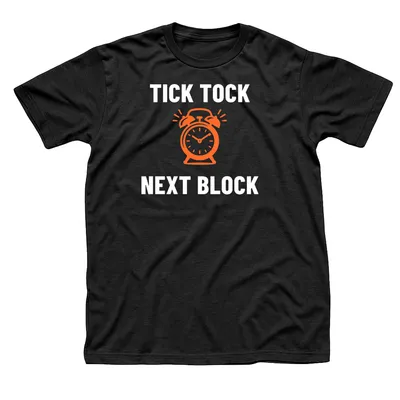
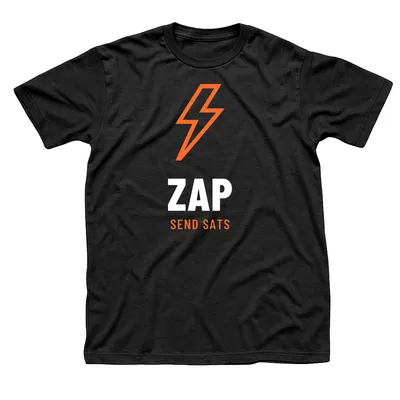
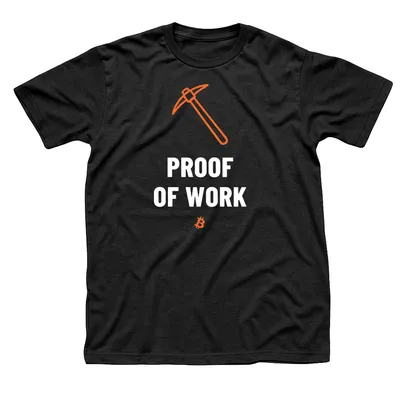
Some of our designs speak this language. The Tick Tock Next Block tee shows an alarm clock for people who know every block is a new auction for space. The Zap Send Sats tee suits anyone who sends tiny Lightning tips instead of paying on-chain fees. And the Proof of Work tee nods to the miners the fees go to. More are on the bitcoin t-shirts page.
Sources: Bitcoin Wiki, Miner fees, Bitcoin Core 30.0 release notes and The Block on the April 2024 fee record.