Bitcoin memes and slang are the shorthand bitcoiners use to joke, argue and encourage each other, and many of them trace back to a single forum post, typo or tweet. This glossary explains 33 of the bitcoin terms you will run into most, grouped into the classic memes, the money talk and the tech words.
Each entry is short on purpose. Where a term has its own deep dive, we link to it, and where we print it on a shirt, we link that too.
Classics
These are the memes that spread far beyond bitcoin forums.
Bitcoin fixes this
A reply bitcoiners post under almost any bad news story, from inflation to censorship. Half joke, half belief that sound money would solve problems at the root.
Few understand
A deliberately smug two-word caption for anything bitcoiners think the wider world has not caught on to yet. It is usually self-aware: the joke is how cryptic it sounds.
Have fun staying poor (HFSP)
A taunt aimed at skeptics, often abbreviated HFSP. Plenty of bitcoiners consider it bad manners, which is partly why it keeps getting posted.
HODL
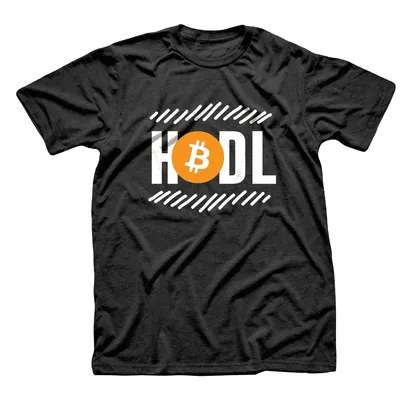
The most famous bitcoin meme of all. On December 18, 2013, during a price drop, a BitcoinTalk user named GameKyuubi posted a rambling thread titled I AM HODLING, misspelling "holding" (the original post). The typo stuck, and "hold on for dear life" was added later as a backronym. Our HODL tee swaps the O for an orange coin, and the full story is in what does HODL mean.
Laser eyes
Red glowing eyes added to profile pictures, a trend that took off in February 2021 as a pledge to keep them until bitcoin hit $100,000. The laser eyes meme guide covers where it started and how to make your own.
NGU
Short for "number go up", a tongue-in-cheek way to describe price going up. It pokes fun at both the hype and the people who only care about the chart.
Orange pill
To orange pill someone is to convince them bitcoin is worth understanding, a play on the red pill from The Matrix plus the color of the bitcoin logo. Being "orange pilled" means you have taken the plunge.
Rekt
Gamer slang for "wrecked", used when a trade or bet goes badly. Usually said about leveraged traders, rarely with sympathy.
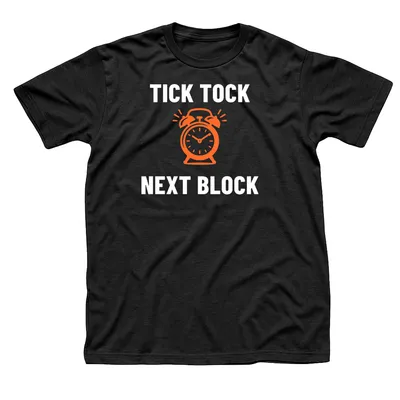
Tick tock, next block
A reminder that bitcoin keeps producing a new block roughly every ten minutes, no matter what headlines say. Calm, steady and a little smug.
Wen moon
A misspelled "when moon?", meaning "when does the price go up a lot?" Its cousin "wen Lambo" asks when you can buy the sports car. Both are used mostly to mock impatience.
Zoom out
Advice to stop staring at today's chart and look at the long-term one instead. Our Bitcoin Wiggle tee, one big hand-drawn coin, was made with that mood in mind.
Money talk
The words people use when they talk about bitcoin as money and saving.
21 million
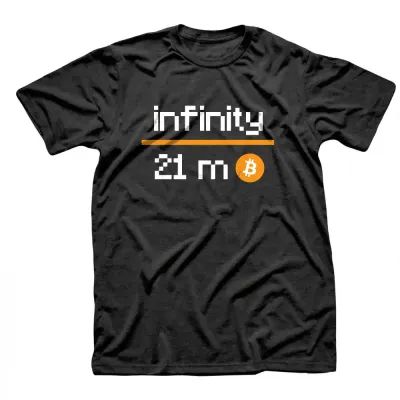
The maximum number of bitcoin that will ever exist, set in the code by Satoshi Nakamoto. Bitcoiners repeat it like a motto, and our Infinity / 21M tee turns it into a math joke. The reasoning is in why only 21 million bitcoin.
DCA
Dollar cost averaging: buying a fixed dollar amount on a regular schedule instead of trying to time the market. It is the most common way bitcoiners describe their routine. Not financial advice, just a definition.
FOMO
Fear of missing out, the urge to buy because the price is rising and everyone is talking about it. Bitcoiners use it to describe exactly the kind of buying they warn against.
FUD
Fear, uncertainty and doubt. The term is older than bitcoin, and bitcoiners use it for negative stories they think are misleading. Sometimes it is fair criticism with a dismissive label stuck on it.
Low time preference
Borrowed from economics, it means valuing the future over instant gratification. Bitcoiners use it to praise patience: saving, building and planning for decades.
Maxi
Short for bitcoin maximalist, someone who believes bitcoin is the only digital money worth caring about. Said with pride by some and as an insult by others.
Pizza Day
May 22, the anniversary of the 2010 purchase of two pizzas for 10,000 bitcoin. The full story is in our Bitcoin Pizza Day guide.
Pleb
A friendly term for an ordinary bitcoiner without a big stack or a famous name. Most bitcoiners call themselves plebs with pride.
Sats
Short for satoshis, the smallest unit of bitcoin. One bitcoin is 100,000,000 sats, which is explained in how many sats are in a bitcoin.
Sound money
Money that holds its value because its supply cannot be inflated at will. Bitcoiners argue a fixed 21 million cap makes bitcoin sound money in a way paper currencies are not.
Stack sats
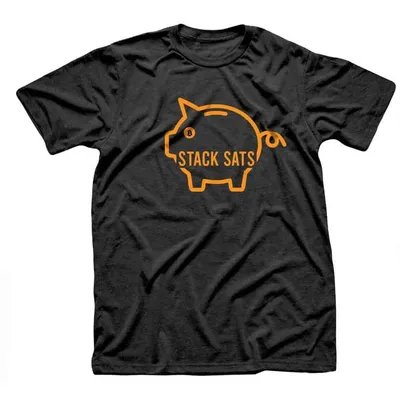
To keep adding small amounts of bitcoin over time, regardless of price. Our Stack Sats tee puts the phrase on an orange piggy bank.
There is no second best
A slogan maximalists use to say no other coin comes close to bitcoin. It shows up in our No 2nd Best design as stacked lettering.
Whale
Someone holding a very large amount of bitcoin, big enough that their moves might nudge the market. Small holders are sometimes jokingly called shrimp.
Tech words
The handful of technical terms that come up in everyday bitcoin chat.
Genesis block
Block 0, the first block of the bitcoin blockchain, mined on January 3, 2009, with a newspaper headline hidden inside. Read what is the genesis block for the details.
Halving
Every 210,000 blocks, roughly every four years, the reward for mining a block is cut in half. The last one was in April 2024, and the next is expected around April 2028, as our next bitcoin halving guide explains.
Lightning
The Lightning Network, a layer on top of bitcoin built for fast, cheap payments. It is how many bitcoiners pay for coffee or tip each other.
Mempool
The waiting room for bitcoin transactions that have been broadcast but not yet included in a block. When the mempool is crowded, fees go up.
Node
A computer running bitcoin software that checks every rule and keeps a copy of the blockchain. "Run your own node" is a common bitcoin rallying cry, and the story of one of the first people to do it is in Running bitcoin and Hal Finney.
Not your keys, not your coins
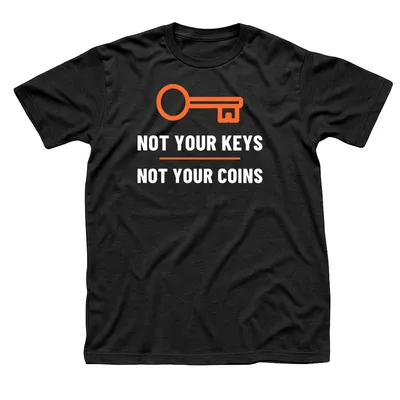
The rule that if someone else holds the private keys, such as an exchange, you are trusting them with your bitcoin. The phrase was popularized by educator Andreas Antonopoulos, and our not your keys guide explains it.
Proof of work
The system that secures bitcoin: miners spend real electricity to find a valid block, which makes rewriting history extremely expensive. The idea is described in the bitcoin white paper.
Self-custody
Holding your own bitcoin keys, often in a hardware wallet, instead of leaving coins on an exchange. Cold storage is self-custody with the keys kept offline.
Zap
A small bitcoin tip sent over Lightning, most often on the social network Nostr. Zapping a post is the bitcoin version of a like that actually pays.