The biggest single holder of bitcoin is widely believed to be its creator, Satoshi Nakamoto, with an estimated 1 million BTC that has largely sat untouched since the early days. Among entities you can actually name, the largest are the funds that hold bitcoin for ETF shareholders and a handful of public companies, but nobody can publish a complete, verified ranking.
That second part is the one people skip. Bitcoin has no register of owners, so every "who owns the most bitcoin" list is an estimate built from public addresses and company disclosures. Here is what the numbers are, where they come from and why they come with an asterisk.
Satoshi's coins: an estimate, not a fact
The 1 million figure traces back to a developer named Sergio Demian Lerner. On April 17, 2013, he published a blog post called "The Well Deserved Fortune of Satoshi Nakamoto." He noticed that many of the earliest blocks were mined in a recognizable way, with the same software quirks repeated, and concluded that one entity had mined a large share of them. He wrote that he estimated "at eyesight" that the fortune was around 1 million BTC.
Two details from that post help put the number in context:
- Of the 1,814,400 BTC awarded in blocks 0 through 36,288, he reported that 1,148,800 had never been spent, about 63 percent.
- He said he could not be certain that every block in the pattern belonged to one person, only that almost all of them seemed to.
Later analysis has refined the pattern, which is now usually called the Patoshi pattern, and the roughly 1 million figure is still the number most people quote. It remains circumstantial: there is no signed message or direct witness. Wikipedia's bitcoin article describes it the same way, saying blockchain analysts estimate Nakamoto had mined about one million bitcoins before disappearing in 2010 (Wikipedia). Our who is Satoshi Nakamoto guide covers the person, or lack of one, behind those coins.
One related fact: the 50 BTC reward in block 0 is part of bitcoin's supply but cannot be spent, so it never counts toward anyone's balance.
ETFs: the largest holders you can name
Since January 2024, spot bitcoin ETFs in the United States have bought and held bitcoin on behalf of their shareholders. According to the tracker Bitbo, US bitcoin ETFs together held 1,287,655 BTC as of October 9, 2026, and BlackRock's iShares Bitcoin Trust (IBIT) held 804,753.6 BTC of that.
Read that carefully, because it surprises people. These funds are not one person's savings. Each is a pool owned by many shareholders who hold shares, not keys. A fund can look like the largest "owner" of bitcoin on a list while belonging, in effect, to thousands of brokerage accounts.
Public companies
Companies that put bitcoin on their balance sheets are the other named group. According to Bitcoin Treasuries, Strategy, formerly MicroStrategy, held 848,000 BTC as of early October 2026, the largest corporate balance on that site. Companies also announce purchases in SEC filings, which makes this the best documented slice of the picture.
The caveat is that company holdings change with each purchase or sale, so any figure is a snapshot. If you are reading this a year from now, check the current numbers rather than trusting these.
Exchanges and custodians: big balances, many owners
Exchanges and custodians often show up near the top of rich lists, and they are the least meaningful entries. A custodian holds bitcoin for its customers. The coins sit in addresses the company controls, but the beneficial owners are the customers, which means a single large balance can represent millions of small ones.
There is a data problem too. Analysts group addresses into "entities" using heuristics, such as addresses that are spent together, and those groupings are inferences, not proof. Exchanges can publish their own addresses and sign messages to show control, but a proof of reserves only covers the addresses the exchange chose to publish. Nobody outside the company can see the whole picture.
This is the real-world version of a point our guide on not your keys, not your coins makes: when coins sit with a third party, the third party shows up on the list and you do not.
Why a true rich list is impossible
Pull the threads together and you can see why a definitive answer does not exist:
- An address is not a person. One person can control thousands of addresses, and one address can be controlled by a company serving millions of people.
- Lost coins look like holdings. Coins whose keys were lost still appear as balances on the chain, but nobody can spend them. No one can say how much of the supply is in that state.
- Privacy is built in. Bitcoin does not require names. That is a feature, and it is also why no registry of owners can exist.
- Self-custody is invisible. Anyone who holds their own keys in a wallet that has never been linked to a name does not appear on any list.
That last point is the quiet truth about bitcoin ownership. The largest group of holders is almost certainly ordinary people with modest balances, and no tracker can name them. If you are one of them, the what is a bitcoin pleb guide has the slang for it.
What the fixed supply means for all of this
Bitcoin's supply is capped near 21 million coins, so every holding is a share of a number that cannot grow. That is why even a single coin is a meaningful slice, and why people talk about how many sats are in a bitcoin. This is a description of how the system works, not advice to buy or sell anything, and nothing here predicts a price.
Tees for the owners nobody can rank
If your favorite part of this story is that you can own bitcoin without anyone knowing, a few designs fit:
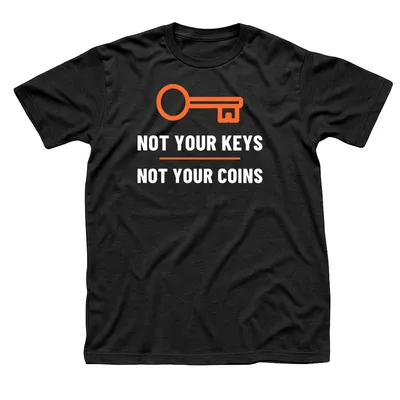
- The Not Your Keys tee pairs an orange key with the full phrase in white capitals.
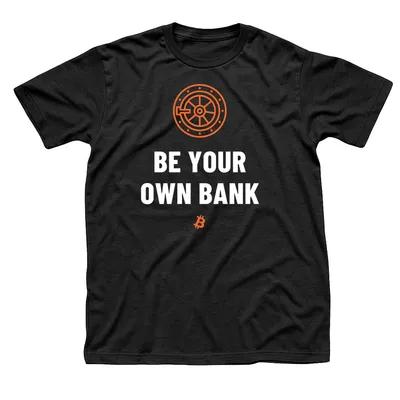
- The Be Your Own Bank tee puts an orange vault door above the slogan.
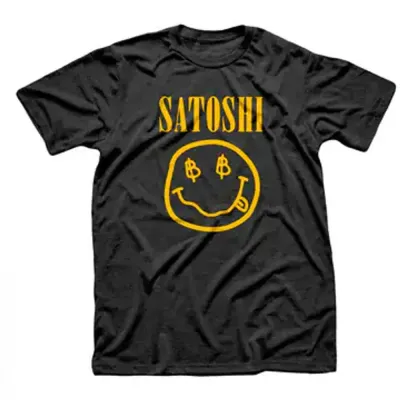
- The Satoshi Smiley tee, an independent fan tribute and not affiliated with anyone, nods to the biggest wallet nobody can open.
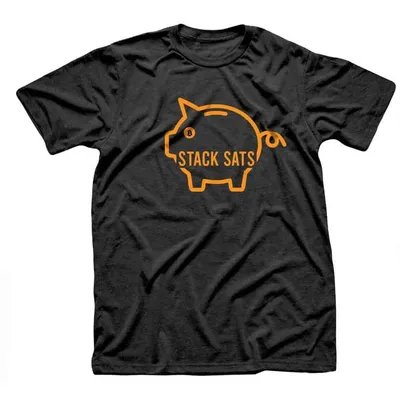
- The Stack Sats tee is for the small, steady holders no rich list will ever mention.
For more ideas, browse the bitcoin quote shirts.
Sources: Sergio Demian Lerner's April 17, 2013 post "The Well Deserved Fortune of Satoshi Nakamoto" on bitslog.com, the Bitbo US ETF tracker (October 9, 2026), Bitcoin Treasuries (early October 2026) and the Wikipedia article on Bitcoin.