In bitcoin, a pleb is an ordinary bitcoiner: someone with a modest stack, no celebrity, no insider access, who uses and saves in bitcoin on exactly the same terms as everyone else. The word is borrowed from the plebs of ancient Rome, the common citizens, and bitcoiners have turned an old put-down into a badge of honor.
So when you see someone describe themselves as "just a pleb," it is usually a mix of modesty and pride. This guide covers the bitcoin pleb meaning, where the word comes from, and the everyday pleb culture of meetups, nodes and small, steady stacking.
Bitcoin pleb meaning in plain words
A bitcoin pleb is a regular person in a network that has no VIP section. There is no minimum balance to join, no application form and no special tier for big holders. A transaction from a pleb follows the same rules as one from a giant fund, and a node run by a pleb on a small box at home checks blocks just as strictly as one in a data center.
That is the heart of the word. Calling yourself a pleb says: I am not a whale, not an influencer, not a company, and I do not need to be. The system works for me anyway.
In everyday bitcoin talk, "plebs" also means the grassroots community as a whole. People speak of plebs organizing a meetup, plebs running nodes, or plebs pushing back on an idea they do not like. It is the bitcoin version of saying "the people."
From Roman plebs to bitcoin plebs
The word has a long history. In the Roman Republic, citizens were split into two orders. The patricians were a small group of old aristocratic families who held most political power. Everyone else, the farmers, shopkeepers, craftsmen and laborers, belonged to the plebs, the general body of free citizens.
The plebeians did not stay quiet. According to Roman tradition, around 494 BC, angry about debt and their lack of a voice, they walked out of the city together and gathered on a hill outside Rome, the Sacred Mount. The walkout worked. To bring them back, the patricians agreed to a new office, the tribune of the plebs, whose job was to protect ordinary citizens from abuses of power.
That struggle, known as the Conflict of the Orders, ran on for generations. One of its milestones came in 287 BC, when the lex Hortensia made decisions of the plebeian assembly binding on all Romans. Those decisions were called plebiscita, which is where English gets the word plebiscite, a direct vote by the people.
Over the centuries the word slid downhill. In modern British and Commonwealth English, pleb became a sneer for someone seen as common or unsophisticated, and the internet happily picked up that meaning too.
Bitcoiners reversed the meaning again. They noticed that the Roman story fits bitcoin surprisingly well: ordinary people, acting together, gaining power without asking permission from the people at the top. Strength in numbers is an old bitcoin theme, and it is the idea behind another of its mottos, which our guide to vires in numeris explores.
Why bitcoiners embraced the word
A few reasons the label stuck:
- Bitcoin's rules do not care who you are. Anyone can hold it, send it, verify it and keep their own keys. A pleb does not need a bank's approval or an exchange's blessing to take part.
- It pushes back on gatekeeping. Calling yourself a pleb is the opposite of claiming to be an expert. It signals that you are still learning, and that nobody has to earn the right to show up.
- It keeps people humble. Bitcoin culture prizes patience and quiet saving over showing off. "Stay humble, stack sats" and "just a pleb" come from the same place.
- It is funny. Taking an insult and wearing it proudly is a long bitcoin tradition. Magic internet money and maxi went through the same journey from jab to badge.
Pleb culture: what plebs actually do
There is no membership card, but some habits come up again and again.
Stacking small amounts
Most plebs build their savings a little at a time, a few dollars a week or whatever is left at the end of the month, rather than in one big purchase. Because bitcoin divides into 100,000,000 sats, even a tiny amount counts. Our guide on how many sats are in a bitcoin explains the unit and the habit of stacking. The running joke is that plebs eat instant ramen so they can stack more. Nobody has to take it literally.
Running a node
Plenty of plebs run their own bitcoin node on modest hardware, an old laptop or a small dedicated box, so they can check the rules themselves instead of trusting someone else's server. It is one of the most pleb things you can do: no reward, no fame, just one more independent copy of the ledger. See what a bitcoin node is for how it works.
Showing up at meetups
Local bitcoin meetups are the living room of pleb culture. They are usually informal: a back room in a bar, a coffee shop table, a pizza night around May 22. People swap stories about how they found bitcoin, help newcomers set up a wallet, argue about the latest developer debate and go home with a new friend or two. Nobody checks balances at the door.
Holding their own keys
Plebs tend to favor self-custody, keeping their bitcoin in wallets where they alone hold the keys. It fits the theme: if the system lets ordinary people be their own bank, why hand that power back?
Thinking long term
Pleb culture leans patient. Many plebs talk about thinking in years or decades, an idea bitcoiners borrow from economics as low time preference.
Pleb, whale, maxi and no-coiner
A quick map of the neighbors:
- Pleb. An ordinary bitcoiner, proud of it. Describes an attitude more than a balance.
- Whale. Someone holding a very large amount, big enough that their trades can move markets.
- Maxi. Short for bitcoin maximalist, someone who sees bitcoin as the only cryptocurrency that matters as money. Many plebs are maxis and many are not. Our bitcoin maximalist guide covers the term.
- No-coiner. Someone who owns no bitcoin at all, often a skeptic.
Is pleb ever an insult in bitcoin?
Inside the community, rarely. It is far more often a compliment, a greeting ("gm plebs") or a self-description. Outside bitcoin the old sting remains, especially in Britain, so a stranger may hear it as an insult if they do not know the context. A safe rule: use it about yourself and your crowd, and let others claim it for themselves.
Shirts for plebs
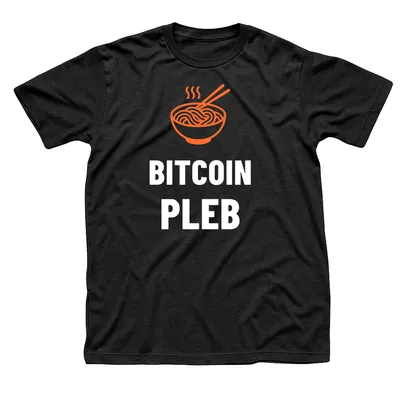
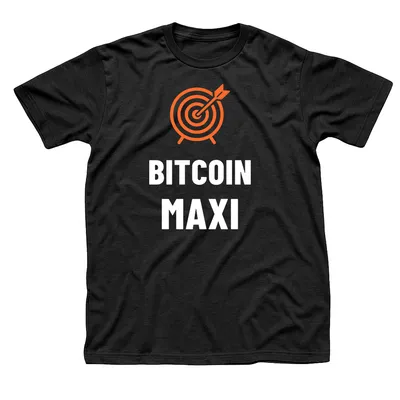
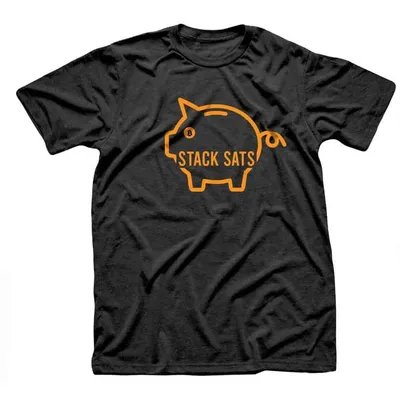
Our Bitcoin Pleb tee leans into the ramen joke: a steaming orange noodle bowl with chopsticks resting in it, over the two words in white. It is the humble badge, funny before anyone even reads the text. If your pleb is also firmly bitcoin-only, the Bitcoin Maxi tee puts a single arrow in an orange bullseye. And for the friend who buys a little every week without fail, the Stack Sats tee turns that habit into an orange line-drawn piggy bank. Each one is a black unisex tee at $39.99, printed to order by a small shop that ships from the USA.
Sources: Wikipedia on the plebeians, Wikipedia on the first secession of the plebs and Wikipedia on the lex Hortensia.