Low time preference means you are willing to wait: you put less weight on having something right now and more on what you can have later, so you save, study, build or invest instead of spending everything today. Time preference is an economics term for how strongly a person prefers present rewards over future ones, and bitcoiners use low time preference as shorthand for patience and long-term thinking.
The phrase shows up in bitcoin podcasts, books and memes so often that it can sound like jargon. The idea underneath is simple, and much older than bitcoin.
Time preference in plain English
Imagine someone offers you $100 today or $110 a year from now. Which do you take? There is no single right answer. It depends on how much you need the money now, how much you trust the promise and what else you could do with $100 in the meantime.
Economists call that trade-off time preference. Nearly everyone has some preference for the present, which is why lenders charge interest and why a reward today usually beats the same reward next year. The question is how strong that preference is:
- High time preference means you strongly favor now. You spend quickly, borrow easily and discount the future heavily.
- Low time preference means you are comfortable waiting. You save, invest in skills, plant things that take years to grow and accept slower rewards.
Neither is automatically good or bad. Someone who is hungry, sick or facing an emergency is right to focus on the present. In everyday bitcoin talk, though, low time preference is almost always meant as a compliment.
Where the idea comes from
The concept is well over a century old. The Austrian economist Eugen von Böhm-Bawerk explored it in his Positive Theory of Capital, published in 1889 as the second volume of his work Capital and Interest. He argued that people value present goods more than future goods for a few reasons: they often expect to be better provided for later, they tend to underestimate their future needs, and goods available now can be put to productive use sooner.
From there, time preference became one of the classic explanations for why interest exists at all. If people prefer having things sooner, someone who lends money is giving up the present and expects to be paid for waiting. Later economists, especially in the Austrian school, built on the same idea.
The marshmallow test and its fine print
The most famous illustration of time preference comes from psychology. In studies at Stanford in the late 1960s and early 1970s, Walter Mischel and colleagues offered young children a treat right away or two treats if they could wait alone in a room for a while. Follow-up studies suggested that children who waited went on to do better in school.
The story is often told as proof that patience is a fixed trait that predicts success. A larger replication published in 2018 by Tyler Watts, Greg Duncan and Haonan Quan found a much weaker link once family background and early ability were taken into account. That fine print matters for bitcoiners too: whether people wait depends a lot on their circumstances, including whether they believe the promised reward will still be there later.
How it became a bitcoin catchphrase
The phrase moved into everyday bitcoin talk largely through Saifedean Ammous's 2018 book The Bitcoin Standard. Ammous argued that money which holds its value encourages people to save and plan further ahead, while money that loses value through inflation nudges them to spend now, because waiting costs them.
That argument fit naturally with bitcoin's fixed supply schedule. If a currency cannot be printed at will, the reasoning goes, holding it is a reasonable way to wait. Our guide on why there are only 21 million bitcoin explains how that schedule works.
From there the phrase became part of the culture. Bitcoiners describe holding through a crash as low time preference, praise friends who learn a trade or plant an orchard with it, and joke about high time preference behavior when someone spends their savings on a flashy car. You will also see it abbreviated as LTP in chats. It sits naturally next to HODL, which our guide on what HODL means traces back to a 2013 forum post.
The debate around it
Not everyone buys the bitcoin version of the argument, and it is worth knowing the objections:
- Mainstream economists generally favor mild inflation. Many argue a small, steady rise in prices encourages investment and avoids the risks of falling prices, and that central banks aim for low inflation for that reason.
- Time preference has many causes. Age, income, health, culture and trust in institutions all shape how people weigh the future. Money is one factor among many.
- Patience is not a guarantee. Waiting only pays off if the thing you wait for holds up. A long-term view does not remove risk.
Bitcoiners have answers to each point, and the argument is far from settled. Either way, nothing here is financial advice.
Low time preference outside of money
The idea is bigger than any currency. Plenty of low time preference habits have nothing to do with bitcoin:
- Learning a skill that takes years to master.
- Cooking at home instead of ordering in, and putting the difference aside.
- Maintaining a house, a car or a friendship before it needs fixing.
- Planting trees whose shade you may never sit in.
- Raising kids with an eye on the adults they will become.
That last image, planting for a future you may not see, is a big part of why the phrase resonates. It turns patience from a sacrifice into a kind of craftsmanship.
Shirts for the patient ones
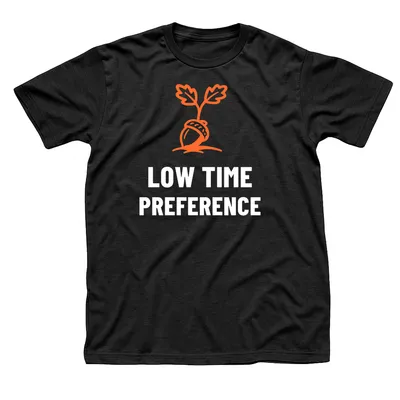
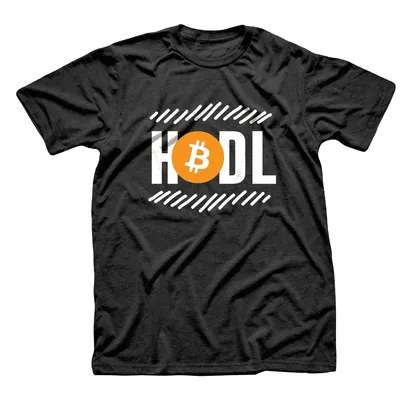
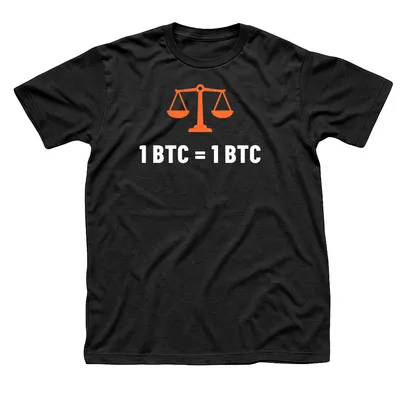
Our Low Time Preference tee shows an orange acorn sending up a small oak sapling, with the phrase in two lines of white capitals below. It is calm rather than combative, which suits a phrase about patience. The HODL tee is the louder cousin, with an orange coin standing in for the O. And the 1 BTC = 1 BTC tee sets the equation under a perfectly level orange scale, for people who measure their savings in bitcoin rather than dollars. All are black unisex tees, printed when you order.
Sources: Capital and Interest, Böhm-Bawerk's work on capital and time and the Association for Psychological Science on the 2018 marshmallow test replication.